
Compliant Gel Bonding for Rugged Display Systems
A soft, optically clear gel layer couples the display to the cover lens while absorbing vibration, shock and differential thermal expansion—ideal for demanding industrial environments.
What is GEL Bonding?
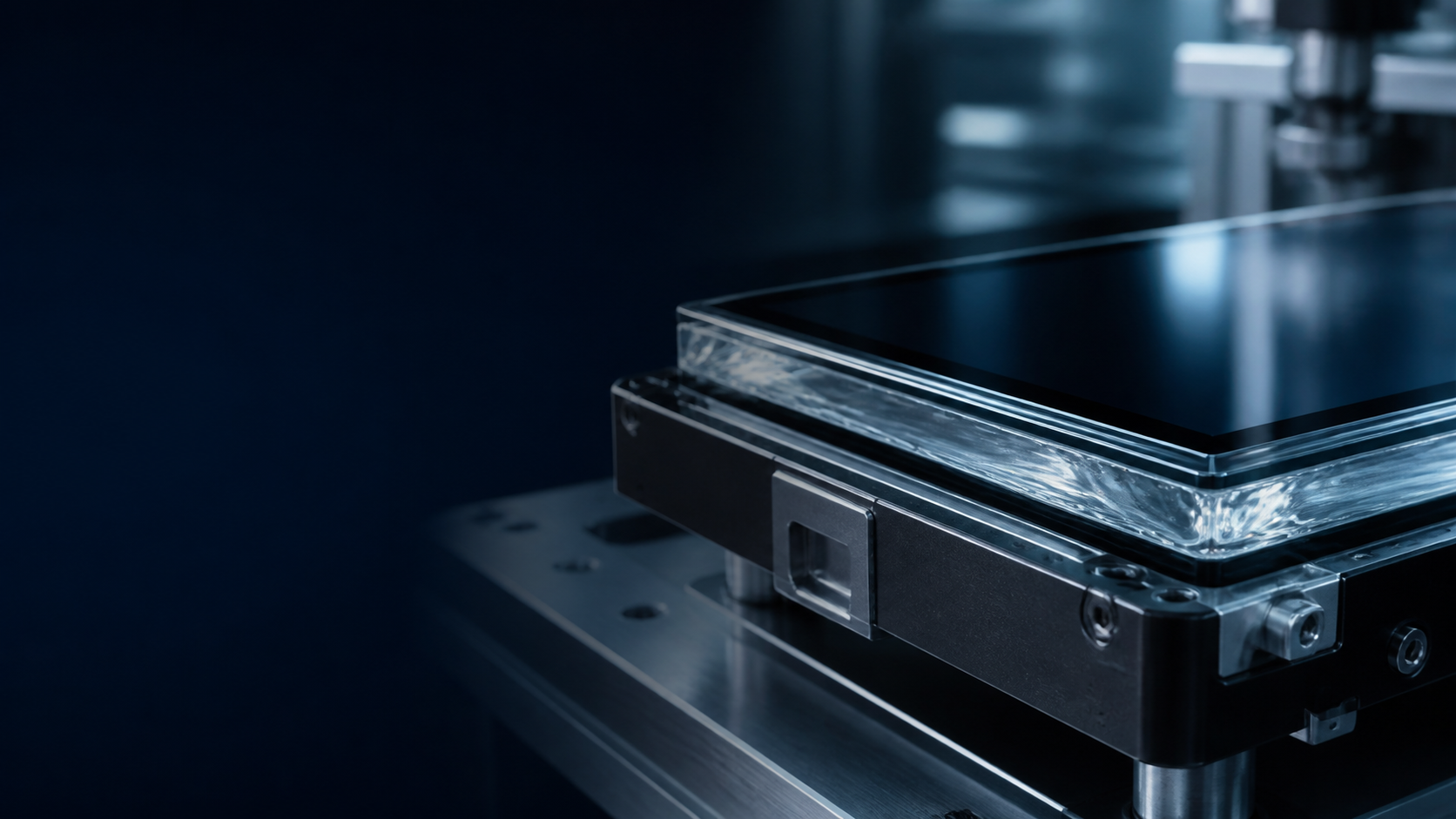
Gel bonding replaces the air gap with a soft, transparent optical gel. The compliant interface improves optical performance while placing less stress on the display than a rigid adhesive system. It can compensate for tolerance variation and movement between materials with different coefficients of thermal expansion.
Vanlytech designs the gel thickness, containment structure and edge seal around the product’s mechanical and environmental loads. The process is particularly valuable where shock, vibration, large panel size, thermal cycling or repair strategy makes a softer optical interface desirable.
Key Advantages
- Lower surface reflection and improved contrast
- Stress relief between cover lens and display
- Excellent shock and vibration damping
- Accommodation of thermal expansion and tolerance variation
- Reduced risk of display mura caused by localized pressure
- Potential for serviceable or reworkable mechanical designs
Our Bonding Process
- Mechanical stack and sealing review
- Gel hardness, thickness and optical-property selection
- Surface preparation and controlled material placement
- Bubble-free assembly and uniform compression
- Perimeter containment or edge sealing
- Optical, leakage, environmental and functional inspection
Typical Applications
Rail and transportation displays, construction and agricultural equipment, marine electronics, military and public-safety systems, large industrial HMIs and equipment exposed to repeated vibration or wide temperature swings.
Engineering Considerations
Gel must be mechanically contained and protected from contamination or migration. Vanlytech reviews gasket compression, venting, bezel load, orientation, temperature range and long-term material compatibility as a complete system.
Designing for Shock, Vibration or Thermal Cycling?
Send us the mechanical stack, panel size, temperature range and environmental test requirements. We will propose a compliant bonding architecture.